

Exocad Esthetic Essentials
A Simplified Approach to Smile Design and Restorative Dentistry
A Virtual Online Course with Live Software Demonstrations, Interactive Q&A, and Educational Handouts
Course Dates:
Course Overview
Simplify the software. Master the tools. Create predictable restorative results.
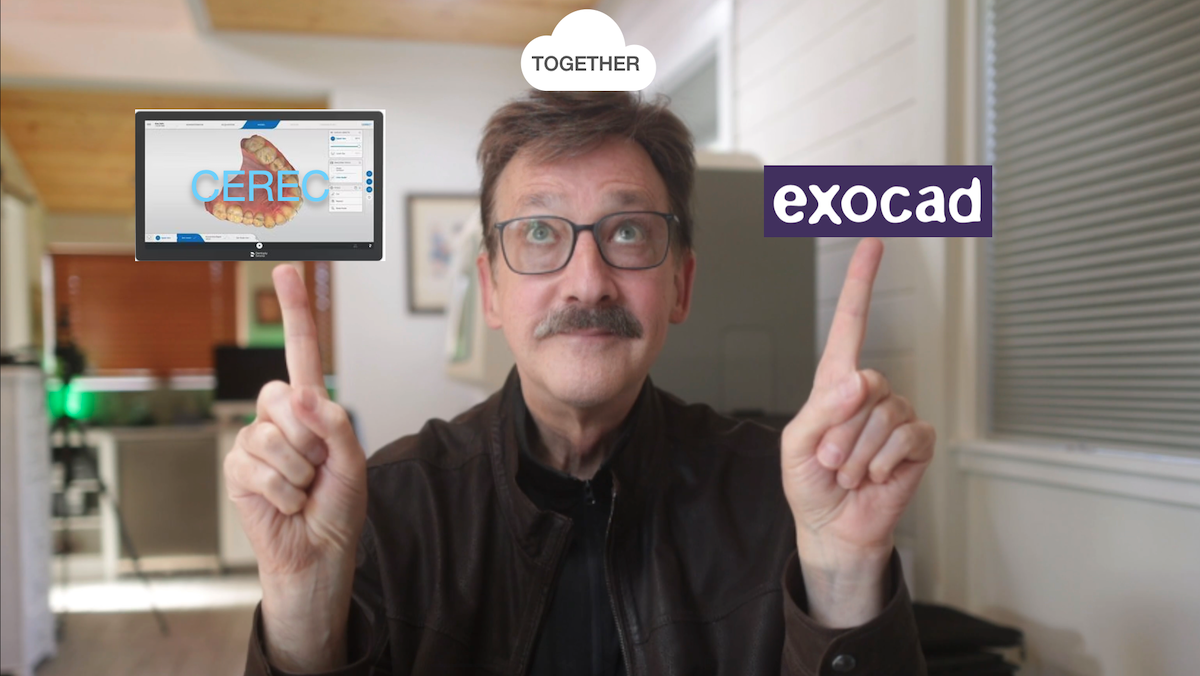
This virtual course is designed for dentists who want to develop greater confidence and efficiency using exocad, whether transitioning from CEREC or beginning their journey with the software.
Through live software demonstrations and clinical case presentations, I will share my personal workflow for digital smile design, diagnostic mockups, restorative design, and transferring digital anatomy to definitive restorations.
The emphasis will be on understanding the objectives of each design phase, selecting the appropriate tools, and establishing an efficient sequence that can be repeated in everyday clinical practice.
The course will also explore how digital design integrates with restorative fabrication and the final aesthetic refinement of IPS e.max restorations.
-
Coming from the CEREC software environment, I initially found exocad to be quite daunting. There were so many tools, options, and design possibilities that it was easy to feel overwhelmed. Where do I start? What is the next step? Which tools should I use? And, most importantly, what am I trying to accomplish at each phase of the design?
As I began learning exocad, with guidance from several outstanding experts, I quickly realized that the software had far more to offer than I initially understood. The challenge wasn't necessarily the complexity of the software. It was learning how to navigate that complexity with a clear objective and an efficient design sequence.
What transformed my experience was establishing three essential principles:
Know your objective: Understand exactly what needs to be accomplished at each phase of the design.
Know your tools: Identify the most effective tools for each task rather than becoming distracted by the many available options.
Develop a consistent sequence: Establish a logical, repeatable workflow that makes the design process intuitive and predictable.
Once I established these principles, I discovered something interesting: my exocad design sequence was remarkably similar to the workflow I had developed over many years using CEREC. Some of the tools were familiar, but many offered even greater capabilities and flexibility.
As I became comfortable with the mouse movements, keyboard shortcuts, and specific design tools, my workflow became remarkably fast, efficient, and predictable. What initially seemed complicated became an enjoyable and powerful part of my restorative practice.
That is exactly what I want to share in this virtual course.
Rather than overwhelming participants with every feature exocad offers, I will demonstrate the essential tools, keyboard commands, mouse movements, and step-by-step design sequences that have made the greatest difference in my own clinical workflow.
My goal is to take the intimidation out of learning exocad and help participants discover how a simplified, objective-driven approach can transform their digital restorative experience.
Course Curriculum
Module 1: Simplifying the exocad Workflow
Creating an Efficient and Predictable Design Sequence
Understand the essential steps of an efficient exocad workflow.
Identify the design objectives at each phase of restoration development.
Demonstrate the most useful software tools for everyday restorative design.
Learn essential mouse movements, keyboard shortcuts, and navigation techniques.
Recognize similarities and differences between CEREC and exocad design workflows.
Develop a consistent design sequence that minimizes unnecessary steps and adjustments.
Module 2: Diagnostic Principles and Digital Mockup Fundamentals
Building Restorative Designs with a Clear Clinical Objective
Understand the diagnostic principles that guide predictable restorative design.
Review tooth proportions, incisal edge positioning, arch form, and occlusal relationships.
Demonstrate a simplified digital mockup workflow in exocad.
Explore practical techniques for developing and refining restoration anatomy.
Learn how to use digital mockups for treatment planning and patient communication.
Module 3: Photography for Facial-Driven Digital Smile Design
Integrating Facial Aesthetics into the Digital Workflow
Review the essential clinical photographs needed for facially driven smile design.
Demonstrate practical photographic techniques, including camera positioning, lighting, and facial orientation.
Identify important facial landmarks and aesthetic reference points.
Demonstrate how clinical photographs can be integrated into the digital design process.
Understand how facial references help guide incisal edge position, tooth proportions, and smile harmony.
Module 4: Transferring the Digital Mockup to the Preparation Arch
From Diagnostic Design to Definitive Restorations
Demonstrate the workflow for transferring an approved digital mockup to the preparation arch.
Review techniques for aligning diagnostic and preparation scans.
Explore tools for preserving the intended restorative anatomy during the transfer process.
Demonstrate efficient refinement of the definitive restoration design.
Understand the relationship between digital design, restorative material selection, and final fabrication.
Module 5: Optimizing Final Aesthetics with IPS e.max
Creating a Customized Aesthetic Fingerprint
Review the importance of digital anatomy in achieving natural restorative aesthetics.
Explore the relationship between restoration shape, surface texture, and light reflection.
Demonstrate the principles of anatomical refinement and surface characterization.
Discuss shaping, texturing, and polishing techniques for IPS e.max restorations.
Understand how individualized finishing creates natural-looking restorations with a unique aesthetic fingerprint.

Course Details
Location: Held Virtually on Zoom
Tuition:
$995 per participant
See bottom of page for participation agreement and cancelation policy
8:30 am- 3:30 pm (Pacific Time)
7 CE credits (Subject code: 610)
Instructor: James Klim, DDS (see below for bio)
Contact: Jenny Event Manager 844-375-5546

Who Should Attend?
This course is designed for:
Dentists transitioning from CEREC to exocad.
Clinicians beginning their exocad journey who want a clear and simplified learning pathway.
Existing exocad users seeking greater design efficiency and workflow predictability.
Restorative dentists interested in digital mockups, facially driven smile design, and aesthetic restorative workflows.
Virtual Course Structure
Live Software Demonstrations
The course will feature instructor-led demonstrations using exocad, highlighting the specific tools, design sequences, and practical techniques I use in my own clinical practice.
Rather than covering every available software feature, the focus will be on the tools that accomplish the most important clinical objectives efficiently.
Interactive Questions and Answers
Participants will have opportunities to ask questions throughout the course, discuss clinical applications, and gain clarity on software techniques and workflow decisions.
Educational Handouts
Downloadable educational materials will reinforce the key concepts demonstrated during the course, including:
Simplified exocad workflow sequences.
Essential software tools and keyboard shortcuts.
Digital mockup design principles.
Facial photography guidelines.
Diagnostic mockup-to-preparation transfer workflow.
Restorative design and aesthetic finishing principles.
Course Format: 100% virtual, demonstration-based education. No hands-on participation, software installation, or physical restorative materials are required.
Course Learning Objectives
Upon completion of this virtual course, participants will be able to:
Simplify the exocad workflow by identifying essential design steps, tools, and keyboard shortcuts that improve efficiency and predictability.
Apply diagnostic principles to the creation of digital mockups that support functional and aesthetic restorative planning.
Integrate facial photography into the digital smile design process to improve restorative visualization and patient communication.
Understand the digital transfer workflow for moving diagnostic mockup anatomy to the preparation arch and developing definitive restorations.
Recognize the principles of aesthetic refinement through anatomical shaping, surface texturing, and polishing of IPS e.max restorations.


CADStar
 Nationally Approved PACE Program Provider for FAGD/MAGD credit. Approval does not imply acceptance by any regulatory authority or AGD endorsement.
 1/1/2026 to 12/31/2029.
Provider ID# 373312 
My Goal for This Course
My goal is simple: I want to make exocad approachable, understandable, and enjoyable.
After years of working with digital restorative technology, I have learned that mastering software is not about knowing every available feature. It is about understanding what you want to accomplish, choosing the right tools, and developing a consistent sequence that produces predictable results.
What once seemed intimidating to me has become one of the most efficient and enjoyable parts of my restorative practice.
I want to share that journey and help other clinicians experience the same transformation.
The software should work for you—not the other way around.
James Klim DDS, FAGD, AAACD
Cancelation Policy and Participation Agreement:
Cancelations after 90 days and up to 60 days prior to course date will be subject to refund minus value of reservation deposit of $495 per attendee. No refund will be issued after 60 days prior to course date.

Instructor: James Klim, DDS, FAGD, AAACD
Dr. Klim is an internationally recognized speaker, author, manufacture consultant, beta tester, and teacher of biofunctional and aesthetic CAD/CAM dentistry.
With over 30 years of clinical experience working with all-ceramic restorative dentistry, Dr. Klim is known for passing on sound clinical understanding and techniques about integrating restorative protocols to the digital platform with predictable results. He is passionate about sharing tools and templates that will assist other CEREC users with their success and satisfaction in the CAD/CAM restorative theater.
Graduating Summa cum Laude, valedictorian, from Loma Linda University in 1984, Dr. Klim has been awarded high academic recognition by the Alpha Omega Fraternity and the Omicron Kappa Upsilon Society and has received the Prince Award from Loma Linda University School of Dentistry.
Dr. Klim has been awarded fellowships from the Academy of General Dentistry and Academy of Dental-Facial Esthetics. He is an Accredited Member of the American Academy of Cosmetic Dentistry.
Currently, Dr. Klim practices and teaches in Santa Rosa, California, and is the founder and director of the Klim Institute CADStar™ CEREC Training Center, and hosts the international cadstar.tv online CEREC training (has been viewed in over 150 countries).
With several years teaching post-graduate levels in functional and aesthetic dentistry, he is now using this experience as one of the most sought after educators in CAD/CAM dentistry. His knowledge and practical clinical experience will mentor the CEREC oriented office with further digital integration and clinical applications.